
Master’s degree programme
Service Innovation and Design
Are you a service, design, business or strategy professional who wants to lead service innovation and customer experience development in your organisation? This master’s degree builds your expertise across human-centred research, design methods, strategic management and futures thinking. The programme is taught in English and delivered through blended learning at Leppävaara Campus.

Degree programme
Master of Business Administration
Degree title
Service Innovation and Design
Extent and duration
90 ECTS, 1,5-2,5 years
About the Service Innovation and Design programme
The Service Innovation and Design (SID) programme equips you with a strong foundation in human-centred research, creative design methods, strategic management and futures thinking. You learn to apply ethnographic research to uncover deep customer insights, use design thinking and service design to create meaningful solutions, and use futures thinking to anticipate change and identify new opportunities. You also gain the ability to shape service-driven strategies and develop viable business models.
Studies are anchored in real working-life development through Laurea’s Learning by Developing (LbD) model. This means you apply what you learn directly to challenges in your own organisation, including in your master’s thesis. The blended format works best for professionals who can attend monthly face-to-face days at Leppävaara Campus. You’ll learn alongside other working professionals from service business, design, technology, public administration and beyond. This multidisciplinary cohort is one of the defining strengths of the programme.
Apply in the joint application
Daytime studies

Not available in January 2027 joint application round.
Blended learning studies
-
Service Innovation and Design, Leppävaara

Application period:
7.1. – 21.1.2027

Language:
English

Semester begins:
09/2027
Online studies
Not available in January 2027 joint application round.
Where can this master’s degree take you?
This master’s degree gives you an interdisciplinary skillset that is valuable across organisations undergoing transformation, from service business and public services to financial services, healthcare and technology. Students come from diverse backgrounds. For some, the degree strengthens their expertise and supports career progression in their current field, while for others it opens the door to new career opportunities.
Career paths in service innovation and design
Your expertise applies in roles such as:
- Service designer or service design lead — designing and developing services across customer touchpoints
- Customer experience (CX) manager — leading customer experience strategy and continuous improvement
- Innovation lead — driving innovation processes and new service development
- Business developer or strategist — shaping service-driven business models and value propositions
- Foresight or strategic insight specialist — using futures methods to anticipate change and identify opportunities
- Transformation consultant — guiding organisations through service-led change
- Researcher or ethnographer in service development — bringing deep customer insight into product and service decisions
- Entrepreneur — building a service design or innovation practice of your own
Your impact
You combine deep customer insight with creative design and strategic thinking. You don’t just improve services — you reshape the way organisations think about value, customers and the future. Your work might mean designing a new customer journey for a public service, building a service-led business model for a growing company, or applying foresight methods to guide an organisation through complex change.
Apply in the joint application
Application period for English-language master’s programmes is held annually in January.
Blended learning studies:
Service Innovation and Design, Leppävaara – Application period: 7.1.–21.1.2027 – Language: English – Semester begins: 09/2027
Daytime and fully online options are not available for this programme.
Eligibility requirements
To be eligible for the programme, you need:
- A Bachelor’s degree (e.g. Bachelor of Business Administration) or another suitable higher education degree completed at a university or university of applied sciences
- At least 2 years (24 months) of relevant work experience completed after the prior degree
In discretionary admission, a relevant former higher vocational level qualification may also be accepted as the basis for eligibility.
A prior background in design is an asset but not required — the programme is designed to build your service design and innovation expertise from a working-life perspective.
Is this programme for you?
- Your work touches service development, customer experience, innovation, business design or strategic transformation
- You have at least 2 years of relevant work experience after your prior degree
- You want to deepen your expertise in service design, design thinking and human-centred research
- You see service innovation as a strategic capability — not just a project methodology
- You are interested in futures thinking, foresight and business design
- You can attend monthly contact days at Leppävaara Campus
What you’ll be able to do after graduation
You graduate with a comprehensive, future-focused competence in service innovation and design that integrates human-centred insight, strategic thinking and practical design capability. You’ll be able to:
- Uncover deep customer insight through ethnographic research, and translate it into innovative service solutions
- Apply design thinking and service design methods to design and prototype solutions for complex, systemic service challenges
- Shape service-driven strategy and business models that connect customer value, organisational capability and revenue logic
- Use futures thinking and foresight methodologies to anticipate change and identify new opportunities
- Lead research-based development in your own workplace, evaluating service-driven transformation in practice
These outcomes are built through six programme-specific core study units that you’ll find detailed below.
Programme structure
The programme consists of programme-specific core competence studies, joint core competence studies, complementary competence studies and a master’s thesis.
Programme-specific core competence studies (30 ECTS)
Core studies are delivered as face-to-face teaching at Laurea’s Leppävaara Campus over 2–3 consecutive days per month.
- Design Thinking (5 ECTS) — critically analyse the principles of design thinking; apply design thinking and its tools to design, justify and implement evidence-based solutions for innovation challenges.
- Service Logic-Based Strategic Management (5 ECTS) — critically evaluate the strategic transition toward service-based business logic; analyse an organisation’s strategy and master the principles and methods of strategic management.
- Deep Customer Insights through Ethnographic Research (5 ECTS) — apply ethnographic and qualitative research methods to discover unarticulated customer needs; analyse customer experiences across all the touchpoints of an organisation.
- Applied Service Design (5 ECTS) — apply service design methods to design and prototype innovative solutions for ambiguous, systemic service challenges; develop the facilitation skills needed in interdisciplinary settings.
- Futures Thinking and Foresight Methodologies (5 ECTS) — apply foresight and futures design methods in service innovation; systematically identify and monitor change in the operational environment.
- Business Design (5 ECTS) — co-create and evaluate business models using business design tools; apply business design in an organisation’s strategic development.
Joint core competence studies (10 ECTS)
All Laurea master’s students complete shared core studies in research-based development methods. These studies build your capability to lead applied research and evidence-based development in your organisation.
Complementary competence studies (20 ECTS)
You shape your own individual study path. You can deepen your expertise in human-centred development, design in digital contexts, foresight, systems leadership, entrepreneurship or resilience — choosing from Laurea’s offering, partner universities (CampusOnline) and Open UAS courses.
Master’s thesis (30 ECTS)
Your thesis is a research-based development project where you apply service innovation and design competencies to a real working-life challenge. Most students develop their own workplace, work on a project with a partner organisation, or contribute to Laurea’s R&D activities.
How do studies fit with your work?
Laurea’s pedagogical model is Learning by Developing (LbD). This means your studies are anchored in real working-life development, not in abstract exercises. You apply service design, ethnographic research and business design directly to your own organisation as you study.
Peer learning enriches your experience
You study in an international, multidisciplinary group of professionals. The mix of industries, roles and cultural backgrounds is a defining strength of the programme — it brings new perspectives to every project and builds a professional network that supports your career long after graduation.
Studying alongside work
- Blended learning — face-to-face days at Leppävaara Campus combined with online study
- Monthly contact days — 2–3 consecutive days per month (typically Thursday–Saturday) on campus
- 1.5–2.5 years — you can progress at your own pace as a part-time student
- 90 ECTS in three parts — core studies, complementary studies and a master’s thesis
- Thesis from your own work — develop your workplace as part of your studies
- Recognition of prior learning — earlier studies and competence can be credited towards your degree
Employer collaboration
Many employers support master’s studies through flexible scheduling, time off for monthly contact days, or by hosting the thesis project. The Learning by Developing model often produces concrete value for your employer alongside your own development.
Concrete benefits for your career
- Recognised master-level qualification — eligible for positions requiring a master’s degree, including public-sector roles
- Specialised expertise in service design and innovation — one of the most sought-after capability areas across industries
- International, cross-sector network — strong connections built through the multidisciplinary cohort
- Practical portfolio — your thesis and project work develop your own organisation, leaving you with concrete examples for your CV
- Recognised practical profile — Laurea is a long-standing reference in service design education in Finland
Tuition fees and scholarships
Non-EU/EEA area students in degree programmes taught in English are charged tuition fees.
Tuition fee: €11 000/ academic year for non EU/EEA students.
Frequently asked questions
Do I need a design background to apply?
No. The programme welcomes students from many backgrounds — business, public sector, healthcare, technology, communication and beyond. A curious mindset and openness to design methods matter more than a prior design degree.
Can I study from outside Finland?
The programme is blended, with monthly face-to-face days at Leppävaara Campus. You can join from outside Finland if you can travel to Espoo regularly.
Can I study alongside full-time work?
Yes — the programme is designed for working professionals. Plan the monthly contact days into your calendar in advance.
Is this degree equivalent to a university master’s?
Yes. A master’s degree from a university of applied sciences (YAMK) gives the same eligibility for public-sector and professional positions as a university master’s degree.
What’s the difference between service design and UX design?
UX design focuses on digital products and individual user experience. Service design takes a broader view — designing the whole service across digital, physical and human touchpoints, and connecting design to business and strategy.
Can I do my master’s thesis with my employer?
Yes — most students develop their workplace as part of their thesis. The Learning by Developing model is designed to make this work in practice.
Can prior learning be recognised?
Yes. Previous higher education studies and competence gained at work can be credited towards your degree. Discuss recognition with your responsible teacher.
How to apply
Applications are submitted through Opintopolku.fi during the announced application periods. For step-by-step guidance, see How to apply to Laurea.
More information
-
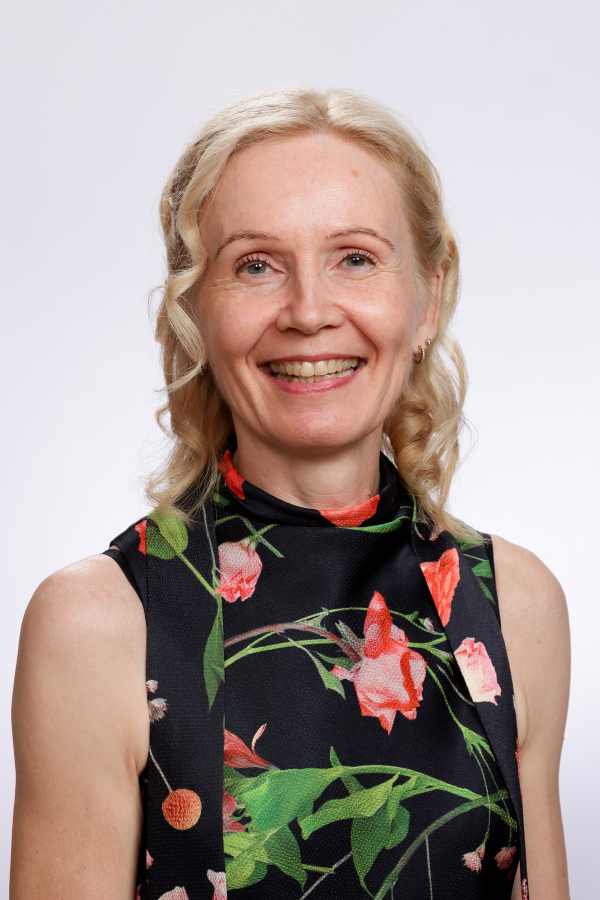
Virpi Kaartti
Principal Lecturer
virpi.kaartti@laurea.fi
+358 9 886 874 86
Read about our master’s degree students’ experiences
-
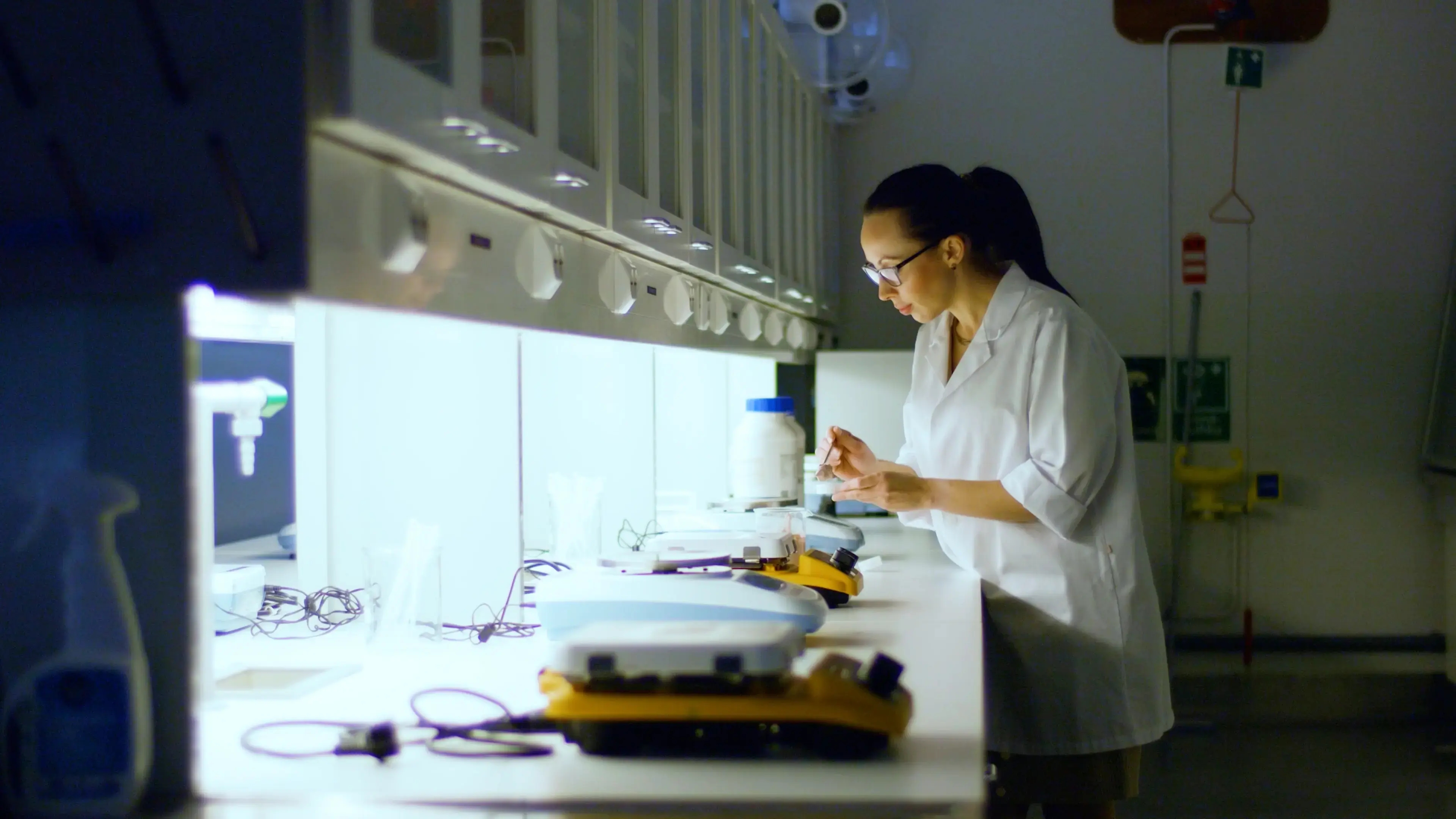 Read more : Master’s Degree in Development and Management of Cosmetics Expertise opens doors to an international career
Master’s Degree in Development and Management of Cosmetics Expertise opens doors to an international career
An interview with Sonja Tammentie, a graduate of the Master’s Degree programme in Development and Management of Cosmetics Expertise.
-
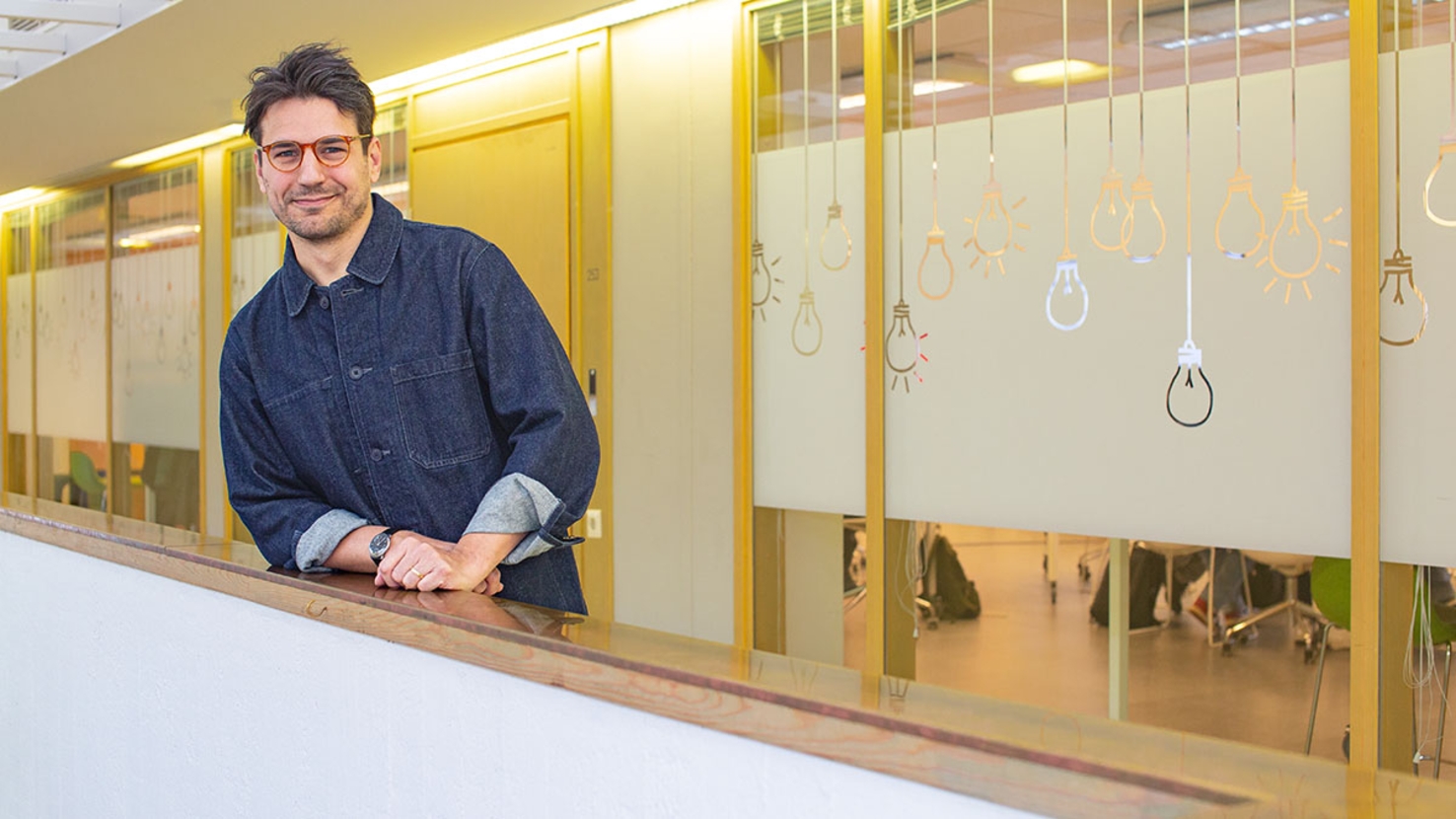 Read more : What is it like to study service design, SID graduate Corey L’Esperance?
What is it like to study service design, SID graduate Corey L’Esperance?
Interview with Corey L’Esperance, who just graduated from the Service Innovation and Design Master’s program at Laurea.
-
 Read more : 5 reasons to study at a University of Applied Sciences
5 reasons to study at a University of Applied Sciences
Laurea students Dinda Rahmaniar and Chien-Chuen Huang give five reasons to study at Laurea.
-
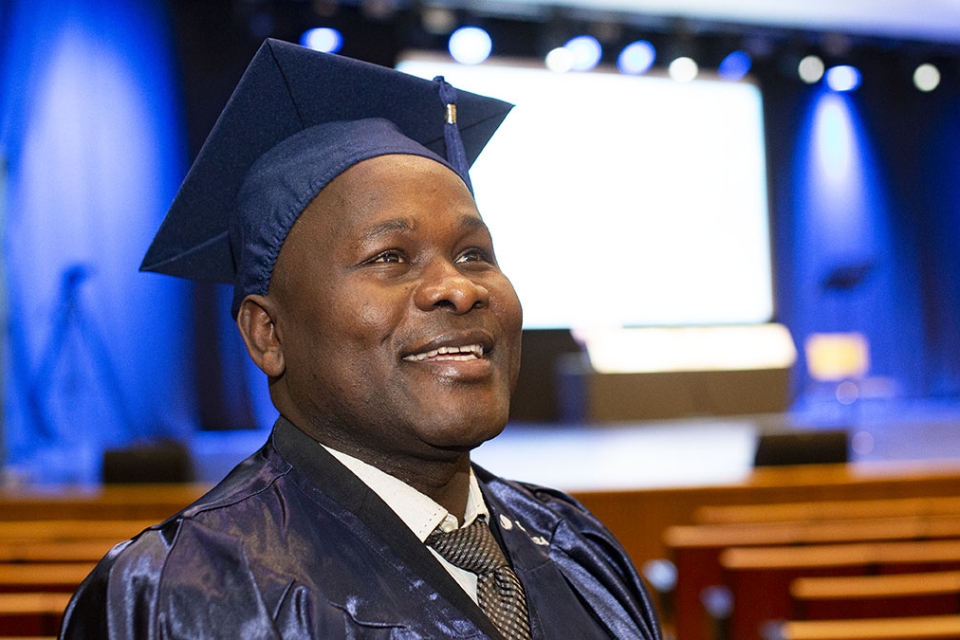 Read more : Master’s degree graduate Gabriel: “The master’s degree will open new doors for me”
Master’s degree graduate Gabriel: “The master’s degree will open new doors for me”
Gabriel Riako graduated from the Master’s Degree Programme in Global Health and Crisis Management.
-
 Read more : Master’s degree student Tarek, ‘Practical studies made it easy to start a career in Finland’
Master’s degree student Tarek, ‘Practical studies made it easy to start a career in Finland’
Tarek Fahmy, born in Egypt, moved to Finland for master’s studies in Service Innovation and Design.
-
 Read more : Aly, student of the Leading Transformational Change MBA programme: “I feel these are things that I can really use in my daily work”
Aly, student of the Leading Transformational Change MBA programme: “I feel these are things that I can really use in my daily work”
Aly Metwaly studies in the Leading Transformational Change master’s programme. When Aly started these business studies, his motivation was already strong, but now he…
-
 Read more : Master of Business Administration Sanna: “Work and master’s studies support each other”
Master of Business Administration Sanna: “Work and master’s studies support each other”
Alumni interview with Sanna Lassila, a graduate of Leading Transformational Change master’s degree programme.
You may also be interested in
-
 Master's degree
Leading Transformational Change
90 ECTS, 1,5-2,5 years
A Master’s programme for independent, curious thinkers who want to change the world!
-
 Master's degree
Technology Law
90 ECT, 1,5-2,5 years
Master’s degree programme for resilient, innovative and socially responsible legal and tech professionals
-
 Master's degree
Global Health, Crisis and Disaster Management
90 ECTS, 1,5-2,5 years
This programme focuses on global health and humanity, health and infection prevention and crisis management.
