
Digital Transformation for Medical Education in Ukraine
Digital Transformation for Medical Education in Ukraine (UkraineDigiTrans) -hankkeessa kehitetään lääketieteen verkko-opiskelua Ukrainassa. Laurean koordinoiman kolmivuotisen hankkeen päätavoitteena on tukea ukrainalaisia lääketieteen yliopistoja digitaalisessa transformaatiossa. Tarkoituksena on kehittää lääketieteen koulutuksiin soveltuvia innovatiivisia digitaalisia ratkaisuja, jotka tukevat verkko-oppimista sotaolosuhteissa. Hankkeessa on mukana neljä ukrainalaista yliopistoa, yksi kreikkalainen yliopisto ja Ukrainan valtiollinen yliopistokoulutuksen laadunvarmistusvirasto.

Rahoittajat


Hankkeen tiedot
Toteutusaika
1.11.2024 – 31.10.2027
Rahoittaja
Erasmus+ 2021-2027 Capacity Building (KA2)
Tutkimusohjelma
Projektityyppi
Teemat
Projektipäällikkö
Tuija Marstio
Hankkeesta
Digital Transformation for Medical Education in Ukraine (UkraineDigiTrans) -hankkeessa kehitetään lääketieteen verkko-opiskelua Ukrainassa. Sen päätavoitteena on tukea ukrainalaisia lääketieteen yliopistoja digitaalisessa transformaatiossa.
Tarkoituksena on kehittää lääketieteen koulutuksiin soveltuvia innovatiivisia digitaalisia ratkaisuja, jotka tukevat verkko-oppimista sotaolosuhteissa.
Laurean koordinoimassa kolmivuotisessa hankkeessa on mukana neljä ukrainalaista yliopistoa, yksi kreikkalainen yliopisto sekä Ukrainan valtiollinen yliopistokoulutuksen laadunvarmistusvirasto. Laurea tuo hankkeeseen asiantuntemusta muun muassa seuraavilta osa-alueilta: digipedagogisten taitojen kehittäminen, tekoälyn hyödyntäminen opetuksessa ja oppimisessa, opiskelijoiden ja opettajien hyvinvointi, digitaalinen resilienssi sekä eettinen osaaminen.
Katso myös nämä videot ja tutustu hankkeeseen
Hankkeen tavoitteet
Hankkeen keskeisimmät tavoitteet ovat
- tukea digitaalista transformaatiota verkko-opetusta kehittämällä
- vahvistaa ukrainalaisten opettajien digipedagogisia taitoja
- luoda joustavia hybridi- ja mikrokursseja, joita voidaan käyttää kriisitilanteissa
- tukea inklusiivista, eettistä ja kestävää digitaalista lääketieteen koulutusta
- huomioida opettajien ja opiskelijoiden hyvinvointi
Keskeisimmät tulokset ja tuotokset
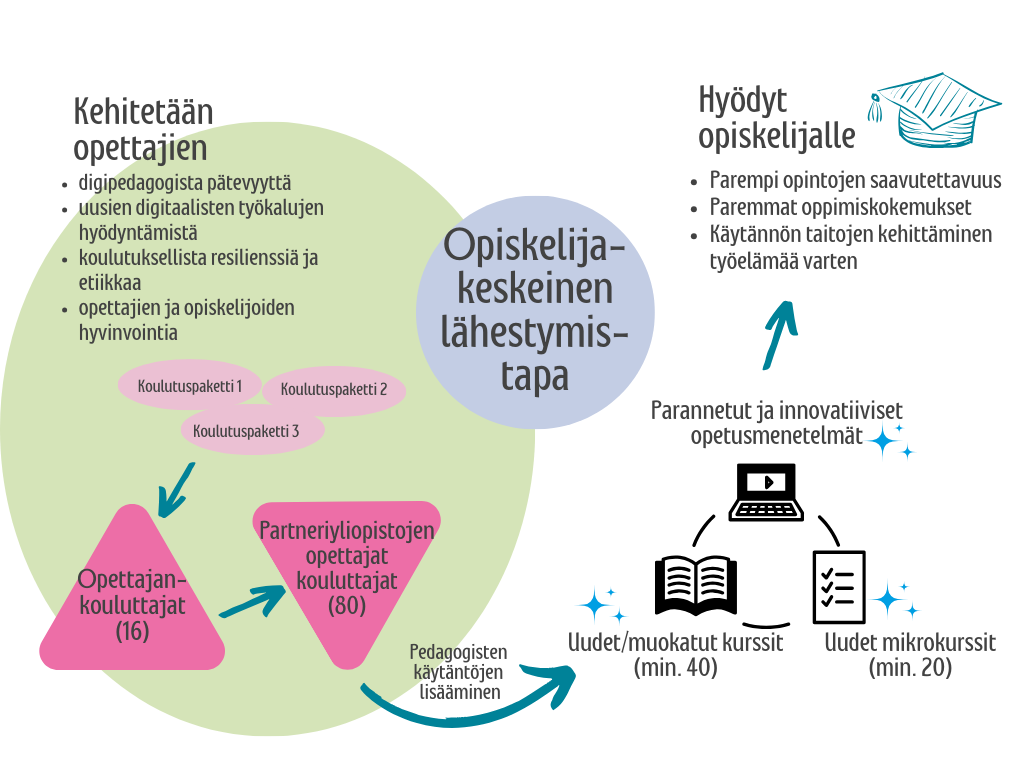
- Luodaan uusia ja päivitetään vanhoja kursseja
- hankkeessa suunnitellaan, luodaan ja päivitetään yhteensä 40 kolmen opintopisteen kurssia
- 20 mikrokurssia, jotka keskittyvät digitaaliseen terveyteen , etiikkaan ja hätätilanteisiin reagointiin
- Opetustaitojen vahvistaminen
- 16 kouluttajaa koulutetaan tukemaan kotiyliopistoidensa kollegoiden osaamisen kehittämistä
- 80 yliopisto-opettajaa suorittavat koulutuksen ja hyödyntävät uusia digipedagogisia taitoja verkkokurssien suunnittelussa ja toteutuksessa
- Käytännön työkaluja ja resursseja korkeakouluille
- jokainen yliopisto luo vähintään 8 pedagogista opasta tai manuaalia
- Pilotoituja ja akkreditoituja kursseja, joita myös muut ukrainalaiset yliopistot ja korkeakoulut voivat hyödyntää
Tapahtumat
”Building Resilient Minds for Digital Future” Cluster Event
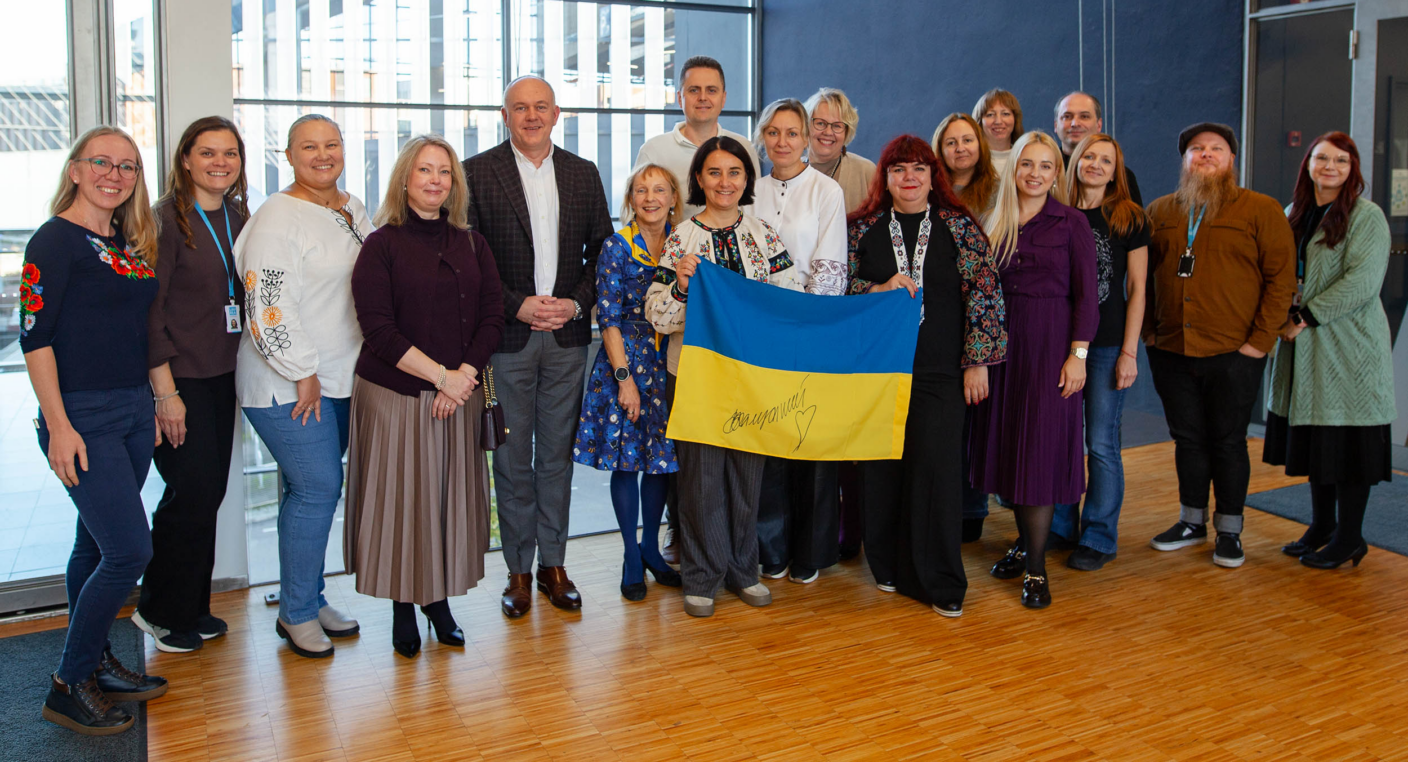
On 13 May 2026, UkraineDigiTrans project co-organised a webinar together with two other Erasmus+ projects, bringing together nearly 100 teachers and education professionals from Ukraine, Georgia, Greece, and Finland. This event was a clustering event that unites actors from different EU-funded projects who share common interests and goals.
In the context of EU-funded projects, a cluster typically refers to a group or network of related projects that focus on a common research theme, topic, or area. Clustering events (also cluster events) are collaborative workshops or conferences typically organized by a cluster which shares a common interest. These events bring together a group of experts from related initiatives to explore a specific topic in depth, exchange knowledge, and identify common challenges and opportunities.
Well-designed clustering events go beyond presenting the project results. They create an interactive space for dialogue and fresh ideas. By connecting complementary expertise, clustering events help avoid duplication of efforts and strengthen synergies across projects. They enable participants from research, industry, and policy to build new partnerships and develop joint solutions.
For the project consortia, clustering events offer a valuable opportunity to extend the reach and impact of the work beyond individual project’s boundaries. These kinds of events amplify the project results by increasing their visibility and long-term sustainability. A shared event is a chance to turn the projects’ outcomes into practical applications and policy discussions across a wider stakeholder community. For the European Union, clustering events are a valuable tool to increase the impact of research funding. The purpose is to search for solutions to the complex challenges of today in a coordinated, collaborative manner.
Joint effort by 3 Erasmus+ funded projects
UkraineDigiTrans project was the initiator for organizing this clustering event. Two other Erasmus+ funded projects with similar interests and aims were suggested to collaborate: BURN and Digi-Change. Thanks to the smooth collaboration with these partners, the event turned out to be very successful. A brief presentation of BURN and Digi-Change projects:
BURN – Boosting University Psychological Resilience and Wellbeing in (Post-) War Ukrainian Nation (January 2024 – December 2026) is dedicated to strengthening psychological resilience and wellbeing in Ukrainian universities during and after the war. Its core goals are to professionalize crisis psychology through new university courses, improve institutional psychological services, and establish Centers for Psychological Resilience and Wellbeing. The project targets psychology students, university psychological service staff, and higher education institution members more broadly, and brings together partner universities from Ukraine, Estonia, Germany, and Latvia to deliver these objectives. Link to the BURN webpage
Digi-CHange (January 2026 – December 2028) aims at digitally transforming medical and nursing education in Ukraine and Georgia. The project develops AI-supported simulations, digital health competency tools, and Digi-CHange Labs to prepare healthcare students for technology-driven practice, while also reforming curricula through an interprofessional ”knowledge chain” model that connects educators, clinicians, engineers, and industry. Two Ukrainian medical universities — I. Horbachevsky Ternopil National Medical University and National Pirogov Memorial Medical University, Vinnytsia — are among the partner institutions, making their staff and students key beneficiaries of the project’s outputs over its three-year lifespan. Link to the Digichangeproject webpage
Evolving role of digitalization in building future-ready mindsets
Tuija Marstio, Coordinator of the UkraineDigiTrans project, delivered an inspiring speech in the event on the role of digitalization in education. She brought up the fact that digitalization is often discussed only in terms of digital tools. However, the impact of digitalization goes beyond the use of digital tools: it shapes how people think, adapt, and cope.
In education, teachers play a key role in integrating technology into learning in pedagogically meaningful ways. They need to adapt their teaching in times of instability, such as war, global crisis and rapid technological changes. For all of us, uncertainty is no longer an exception, but it has become the norm.
“Digitalization is not only about improving education systems but also supporting people’s ability to learn, to adapt and to remain resilient.”
– Tuija Marstio, Coordinator of the UkraineDigiTrans project
In her presentation, Dr. Marstio highlighted five key elements of a future-ready mindset for healthcare professionals:
- Adaptability and continuous learning
- Ability to work with uncertainty and complexity
- Critical and ethical thinking
- Digital confidence, meaning belief in ability to use and adapt and to trust digital tools and technologies
- Psychological resilience and professional identity
She also argued that education needs to move from content mastery to capability building, and from digital tools to digital thinking. Digitalization in medical education supports clinical reasoning, simulation, interprofessional learning, and decision-making under uncertainty.
“The question is no longer “which tools we use?” but instead “what kinds of thinking and learning do we design?””
– Tuija Marstio, Coordinator of the UkraineDigiTrans project
As a final remark, Marstio emphasized that digitalization must remain human-centered. Tools are just tools, and teachers are the ones who give meaning, direction, and humanity to learning. Especially in the medical field, ethics, empathy and professional judgement remain irreplaceable. Digital tools and AI should therefore be seen as partners that can be used to support teaching and learning, not as replacements.
Hankkeen toteuttajat






Kestävän kehityksen tavoitteet
Yhteystiedot
-

Tuija Marstio
Lehtori
tuija.marstio@laurea.fi
+358 9 886 879 48
Lisää samasta teemasta
Sinua saattaa myös kiinnostaa
-
Eloisa – Luovat menetelmät ja taidelähtöinen toiminta
Toteutusaika:
1.9.2021 – 31.8.2023
Lue lisää hankkeesta: Eloisa – Luovat menetelmät ja taidelähtöinen toimintaTutkimusohjelma:
Kestävä ja monipuolinen sosiaali- ja terveysala -
Osaamissilta – vaikuttavaa TKI-lähtöistä osaamisen kehittämistä
Toteutusaika:
1.8.2026 – 30.11.2028
Lue lisää hankkeesta: Osaamissilta – vaikuttavaa TKI-lähtöistä osaamisen kehittämistäTutkimusohjelma:
Palveluliiketoiminta ja kiertotalous -
KAMUT – Kansalaisjärjestöjen merkitys, mahdollisuudet ja arvo osana yhteiskunnan turvallisuutta ja kriisinkestävyyttä
Toteutusaika:
1.6.2026 – 30.6.2027
Lue lisää hankkeesta: KAMUT – Kansalaisjärjestöjen merkitys, mahdollisuudet ja arvo osana yhteiskunnan turvallisuutta ja kriisinkestävyyttäTutkimusohjelma:
Yhtenäinen turvallisuus