
Event
Criminology Days

The fourth annual Criminology Days will be held in Vantaa at Laurea University of Applied Sciences’ Tikkurila Campus on 4–5 November 2026, with the theme Crime Prevention in a Changing Society. The event is organized in collaboration between Laurea University of Applied Sciences, the Training Institute for Prison and Probation Services (RSKK), the Prison and Probation Services of Finland (RISE), and the Finnish Society of Criminology (SKY).
The theme of the upcoming event is closely linked to the focus areas of Laurea University of Applied Sciences’ Correctional Services Research Group, Sustainable and Versatile Social and Health Care and Coherent Security research programme. Criminology Days will examine crime prevention amid societal transformation. This broad theme will be approached through questions related to well-being and security, but also from the perspectives of structural changes in society and individual participation.
Criminology Days offer researchers, developers, teachers, and students in the field the opportunity to present their research and development work from a variety of viewpoints. The keynote speakers of Criminology Days will be desistance research pioneers, Professors Stephen Farrall (UK) and Isabelle F.-Dufour (CAN). Commentary speakers are Samuel Singler (FIN) and Elsa Saarikkomäki (FIN).
Programme
Wednesday, 4 November 2026
8:30 Registration opens
9:00 Autumn Meeting of the Finnish Criminology Association
(for members and those interested in joining)
10:00 Opening of the event
Deputy Mayor of the City of Vantaa, Riikka Åstrand
Director General of the Prison and Probation Services of Finland, Anna Arola-Järvi
10:30–12:00 Keynote Lecture (in English)
Professor Stephen Farrall, University of Nottingham, UK
Commentary: Assistant Professor Samuel Singler, University of Helsinki, FIN
12:00 Lunch break (at own expense)
13:00–14:30 Working groups
14:30 Coffee and posters
15:00–16:15 Working groups
16:15–16:30 Break
16:30–18:00 Working groups
19:00–22:00 Evening event
Thursday, 5 November 2026
8:30 Registration opens
9:00–10:15 Working groups
10:15 Coffee break
10:30–11:45 Working groups
11:45 Lunch break (at own expense)
12:45–14:00 Working groups
14:00–16:00 Keynote Lecture (in English)
Professor Isabelle F.-Dufour, Université Laval, Quebec, Canada
Commentary: Dr. Elsa Saarikkomäki, University of Turku, Finland
15:30 Veli Verkko Award ceremony and recipient’s speech
15:50 Closing remarks
The event will be held in Finnish, while the keynote and commentary presentations will be in English. It is also possible to propose presentations and working groups in English.
Keynote Speakers
Stephen Farrall

Professor of Criminology, University of Nottingham, UK
Exploring the Individual-Level Effects of New Labour’s Social Policy Agenda on Crime Over the Life-Course: Outlining a Strategically-Paired Cohort Study
Stephen Farrall is a sociologist with a strong interest in processes of change at both individual and societal levels. At the individual level, his research has examined how people recover from spoiled identities, particularly following a criminal conviction or series of convictions. More recently, his work has focused on political, social, and economic change at the national level, using the government led by Margaret Thatcher as an example of how ideological shifts can produce tangible effects in everyday lives many years later.
Isabelle F.-Dufour

Professor of Psychoeducation, Universite Laval, Quebec, Canada
Social Support and Assisted Desistance: Conceptual Perspectives and Implications for Practice
Isabelle F.-Dufour is a full professor in the Psychoeducation program at Laval University. She is also a regular researcher at the Institut universitaire Jeunes en difficulté ans at the Centre de recherche Jeunes, familles et réponses sociales. Since 2012, her focus has been on desistance from crime, and more recently, on assisted desistance. Her work aims to highlight how adolescents and young adults manage to abandon their ‘criminal careers’ with or without the assistance of criminal justice or psychosocial interveners. Since 2018, she has been co-directing, with Natacha Brunelle, a research axis of the collaborative project Ré(SO) 16-35. This axis aims to identify the trajectories of persistence and desistance of young Quebecers aged 16 to 35 who have experienced judicialization.
Commentary Speakers
Samuel Singler
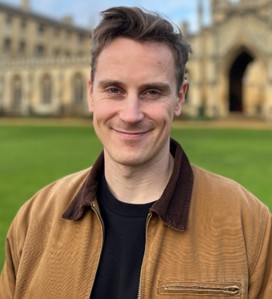
University Lecturer in Societal Security, University of Helsinki, Finland
Digital futures, crimmigration control, and new directions in criminal policy
Samuel Singler’s research is situated within the fields of Border Criminology and digital criminology, and focuses on the relationship between novel surveillance technologies, criminal justice, and border control. His empirical work illuminates how and why security devices diffuse across and through borders, how they shape contemporary ‘crimmigration’ policies, and how they are deployed and contested on the ground. He has also made theoretical contributions to the study of technology from a criminological perspective, examining how new and future digital tools reshape public surveillance and policing practices. His research situates the development of surveillance technologies against the background of postcolonial hierarchies, with the aim of contributing to the decolonization and Southernization of criminology.
Dr. Elsa Saarikkomäki

University Lecturer, Docent, University of Turku
Changing Crime Control: Youth Groups and Hybrid Forms of Policing, Trust and Intervention Experiences
Elsa Saarikkomäki is a University Lecturer in University of Turku, Faculty of Law, and Docent in Criminology. Currently, Saarikkomäki is a PI of the sub-project in consortium ‘Youth Groups: Urban Leisure, Control and Crime’. The project examines youth groups and group crime in urban spaces, as well as the control of youth in groups (2025-2029). Saarikkomäki has conducted a comparative international project on minority youth’s experiences of procedural justice and ethnic profiling in Nordic countries. Her PhD studied young people’s experiences of police and security guards (Institute of Criminology and Legal Policy, University of Helsinki, 2017). Her research interests have focused on privatisation of policing, legitimacy of private policing, young people’s trust in policing, ethnic profiling, desistance, crime victims, and asylum seeker control policies.
Abstracts
Submission period for presentation and working group proposals: 20 April–23 August 2026
Submission of presentation and working group proposals: kriminologia2026@laurea.fi
Working Groups
The working group option is intended for large research projects, research teams, or those who use the same data, method, or theoretical approach. Proposing an entire working group ensures that the presentations form a coherent whole. The working group proposal is submitted by the chair of the group, who agrees in advance with the presenters on forming a joint session. The chair may give their own presentation if they wish, but it is not required. Each working group is allocated 75 minutes, which can be divided into three or four presentations, leaving room for discussion. When submitting a proposal, include your contact information and the title of the working group. The maximum length of the actual proposal is 200 words. The abstract should describe the main theme of the working group, such as a shared research project, topic, method, or theoretical perspective. Attach the abstracts of all presentations as separate files. These abstracts should follow the guidelines for individual presentations and include the name(s) and affiliation(s) of the author(s).
Individual Presentations
You may propose an individual presentation for the Criminology Days without being part of a pre-arranged working group. The duration of the individual presentation is 15 minutes. Based on accepted abstracts, the organizing committee will form the working groups and appoint one of the presenters as the chair. When submitting a presentation proposal, include your contact information (or the details of all presenters) and provide a title for your proposal. The maximum length of the actual proposal is 200 words. The abstract should, as applicable, describe the background of the research, research questions, data and methods, as well as key results and conclusions.
Posters
The Criminology Days include a dedicated poster area, intended primarily for newly launched studies, research projects, and doctoral research. When submitting a poster proposal, include the title, abstract, and the author’s name, email address, and affiliation. The maximum length of the abstract is 200 words. Posters may also be in English. You can use your own organization’s poster template or the template below.
The programme and schedule for presentations and working groups will be published in September.
Registration
Registration period: 24 August–4 October 2026 via this form
Conference participation fees:
- Members of the Finnish Society of Criminology: 50 €
- Non‑members: 110 €
- Students: Free for undergraduate students; for doctoral students, the fee follows the rates listed above.
If the auditorium’s capacity is exceeded, some participants will follow the programme in a separate room via a live stream. The organiser is in charge of managing the venue arrangements and the placement of participants. Please note that the participation fee is the same even if you attend only one of the conference days.
Conference dinner ticket (for all participants, maximum 100 people): 50 €
Join the Finnish Society of Criminology on their website.
Pre-conference for Doctoral Students
The pre-conference for doctoral students will take place on Tue 3 November, starting at 13:00, at the Training Institute for Prison and Probation Services (address: Vernissakatu 2A, 01300 Vantaa).
This relaxed event, aimed at doctoral students, offers an opportunity to present criminology-related research and to network with other doctoral students interested in similar topics. Participation is free of charge and the event concludes with a social gathering in the evening. Pre-conference can accommodate maximum 40 doctoral students in the order of registration. Event is in Finnish.
Registration here (20th April–18th September 2026)
Location and Accommodation
Tikkurila Campus, Ratatie 22, 01300 Vantaa

Laurea’s Tikkurila Campus is easy to reach by public transport. Tikkurila railway station and the Dixi shopping center are located directly opposite the campus. Most local bus lines also stop at the station. Those arriving by car will find paid parking spaces on nearby streets as well as in the parking garages of the Dixi shopping center and Rataparkki. HSL park-and-ride facilities can be found on Ratatie and Jokiniementie.
Accommodations
There are many hotels in the area. Here are a few examples.
Contact
kriminologia2026@laurea.fi
More information
-

Eeva Järveläinen
Principal Lecturer
-
Janika Lindström
Senior Lecturer
janika.lindstrom@laurea.fi
+358 40 637 5006
Partner organisations







Voisit olla kiinnostunut myös näistä
-
13.10.2026
OWASP Helsinki Chapter meetup – Cyber Evening @ Laurea UAS & Online
Lue lisää: OWASP Helsinki Chapter meetup – Cyber Evening @ Laurea UAS & Online