
Studying at Laurea
Studying at Laurea is full of opportunities. You can study online, on campus, at a work place, in projects big and small, through creating a business of your own and by going on an international exchange abroad.

Have your laptop ready
At Laurea, you need to have your own computer (preferably a laptop) to study.You can not participate in courses using your phone.
As your studies may last several years, you should make sure your computer is also usable during the whole time. We recommend your laptop/computer meets the following requirements:
- Intel i5/i7 processor (atleast 8 generation) or AMD Ryzen 5/7 or a processor of equal performance
- RAM: 8Gb
- Hard drive: at least 256Gb of SSD memory
- Operating system: Windows11 (recommendation)
You may need a webcam and headphones with a microphone (headset) during studies.
Get ready for real-life projects
At Laurea, you will learn through real-life development projects. This approach is called Learning by Developing, LbD, and it is at the very heart of all studies at Laurea.
You will carry out research and development projects together with your fellow students, your teachers and the “customers” of the projects, i.e. the representatives of the companies or organizations that give you the project. Working on real-life LbD-projects will help you to develop creative problem-solving techniques and practice skills that you need in your future work place.
So be prepared to be active and take part in group work that aims at developing and solving real life issues! LdB gives you a great chance to get to know different companies and working environments and to create your own future professional network.
Your teachers are there for you
At Laurea, your teachers are there to help you succeed. At the beginning of each course, your teacher will tell you how you can contact them. When sending them an e-mail, for example, you can write the topic in the subject field (e.g. “Questions about assignment in course X”). Please remember to use your Laurea email address so that your teacher will be able to know who you are.
Don’t hesitate to contact your teacher if you have any questions, they are happy to help you! If you have issues that might affect studying (for instance dyslexia, mental health problems, health-related issues), it’s a good idea to let your teacher know.
Asking for support or individual arrangements won’t affect grading, and this information will stay strictly between you and your teacher. There are various support channels available at Laurea, if you need help.
If you have questions or concerns about other topics than your courses, there is a whole team
ready to help you at Laurea.
- Your tutor teacher and the student affairs’ office can help you in any study-related issues
- (enrolments, starting studies after an absence etc.)
- Laurea Wellbeing team can help you at any stage of your studies. Just contact the team by
email or text and you will get a personal appointment. - If you need support related to other issues that your courses, you can contact the University
Chaplains or Councelling Psychologists. The University Chaplains serve all Laurea students
regardless of the stage of studies, religion, nationality or life situation. Contact information in
student intranet. - There is also support available for career management and employment.
- Remember that it’s always to better to ask the way than go astray!
Take responsibility for your own studies
Studying at Laurea requires you to take responsibility for your own studies. If you “just don’t feel like going to class”, no one will call you or come and get you (unless you’re lucky to have some great friends!).You need to take responsibility for showing up at course meeting and other events. There are many ways and possibilities to study at Laurea from online studies to project work and work placements, but what all these have in common is that you are the one in charge of your own studies.
Studying full-time means around 36 hours of styding each week. This includes course meetings, lectures, independent studying, exams, project work etc. Making a weekly schedule in advance might be a good idea to help you organize your study week. Finland is known for a good work-life balance, and it is recommended that you also take time off from your studies and focus on your personal life.
Taking responsibility for you own studies does not mean that you have to make it alone. A big part of your studies will be group work. Also, your teachers, tutors and the Laurea Wellbeing Team staff are always ready to help you out!
Services and support to students
Keskeiset opiskelijapalvelut ovat käytössä kaikilla kampuksilla. Opintojen alussa voit olla yhteydessä opiskelijakunta Laureamkoon ja hankkia opiskelijakortin.
Study services
Study services guidance and support on study-related matters. You can receive service in person, by phone, or via email.
Wellbeing services
Laurea offers students the services of a Councelling psychologist and a Special education teacher to support wellbeing of the student. Our partners Finnish Student Health Service offers student healthcare and municipal congregations offers the services of student priests to all students.
Read more about our wellbeing services in the Student Guide.
Study and career guidance
Study counselling and academic advising is available for all student groups: Bachelor’s degree and Master’s degree students, exchange students and Open University students. The purpose is to support students in different phases of their studies.
Read more about study and career guidance in the Student Guide.
PopUp Guidance
PopUp Guidance (in Finnish Poikkeamo) serves students by appointment. Popup Guidance provides information, advice, support and guidance on general matters related to studies and student well-being.
International services
The International Services team will help you find ways to gain international competences and experiences during your studies. You will get guidance for long and short study exchanges, and you can for example apply for a grant for traineeships abroad. We offer guidance by appointment.
Different ways to study
Online studies
Online studies are included in all study programmes, amount varying from less in daytime studies and more in blended learning to nearly all in online study programmes. Online studies consist of independent study, teamwork and online guidance. Blended learning and online study programmes require students to be self-directed.
Work placements
The purpose of the placement is to support the development of your professional identity. Work placements are a mandatory part of each study programme, as they provide you guided instruction to the most important practical aspects of work in your field and let you apply your skills and knowledge in practice.
Thus, placement is one of the most important parts of your studies as it will open the doors into the world of work. The length, objectives, content and organisation of the placement vary in different degree programmes. You will receive further information on the placement when you have started your studies. Placement can be carried out in Finland or abroad. Placement can be completed either as a full-time or as a part-time work.
Work based learning
If you work while studying, you also have an opportunity for work-based learning: acquiring a foundation of knowledge to support your working tasks and putting it into practice as you perform the agreed working tasks.
Work-based learning is an alternative study method. To utilize this operational model, you should have personal self-initiative and take up the matter yourself at Laurea. You can ask more from your tutor teacher.
So how and what should I learn?
It is possible in work-based learning to learn the knowledge and skills required at work in a versatile and comprehensive manner. You acquire foundation of knowledge as support for your working tasks, which you can quickly put into practice as you perform the agreed working tasks.
The tasks agreed for your work-based learning are entered into your Learning contract in order to identify and obtain recognition for the competence you have acquired. The demonstrations are based on the goals of the curriculum.
Work-based learning proceeds on the basis of your own development needs. It is advisable in arranging your tasks to consider your own career path. You can try with your employer to arrange job enrichment, i.e. a job role that has more versatility and range than before. You can therefore embark on consciously developing yourself with regard to your own competence in the manner you prefer.
How is my competence assessed?
Learning and competence should be made visible – so it can also be evaluated by another person. A portfolio, for example, serves as a demonstration technique. The evaluation occurs by documenting your own learning and competence, adding up the total number of working tasks, and qualitatively assessing your own competence. In addition to self-evaluation, the evaluations and feedback from your supervisor, a close colleague and your teacher are applied.
How do I arrange work-based learning?
To arrange work-based learning, proceed as follows:
- Acquaint yourself with the curriculum and think about which competences are included that you could develop at work.
- Have an initial conversation about the working tasks at your workplace and the targets of work-based learning.
- Arrange a preliminary discussion to assess, together with the teacher responsible for the module or a study unit, the possibilities for work-based learning. The person in charge of the module or study unit will guide you in the preparation of the Learning contract.
- Plan the development of your competence by filling in the Learning contract.
- Arrange a discussion with the representative or teacher in charge of the module, during which you confirm the Learning contract and prepare the evaluation form.
- Start your studies in accordance with the Learning contract and document your competence.
If you don’t know how to get started with the process, you can ask assistance from your tutor lecturer.
Competence obtained via work-based learning is recognized as part of the degree programme. The performance items accumulate credits that entitle the student to a study grant.
For more information, contact the head of student affairs or your tutor teacher.
Project work
Project work is included in all study programmes. Projects vary from smaller ones that are part of a study unit to larger ones carried out for individual companies or as part of a large-scale international project. Depending on your field of study, you may complete several study modules in projects. Research is part of project work and prepares you to do your thesis at the final stage of your studies.
Internationality
Internationality comes naturally when studying at Laurea. Besides studying together with students from varied cultural backgrounds, you may apply to study or train abroad, study languages or include international elements in your thesis. Laurea has a network of over 200 exchange destinations over the world.
Read more about your internationalisaton options in the Student Guide.

Student stories
-
 Read more : Akseli celebrates completing his degree in social services: “Graduation is a mountain I’ve always dreamed of climbing”
Akseli celebrates completing his degree in social services: “Graduation is a mountain I’ve always dreamed of climbing”
Social Services graduate Akseli Hepo-oja celebrated his graduation today at Laurea’s commencement ceremony.
-
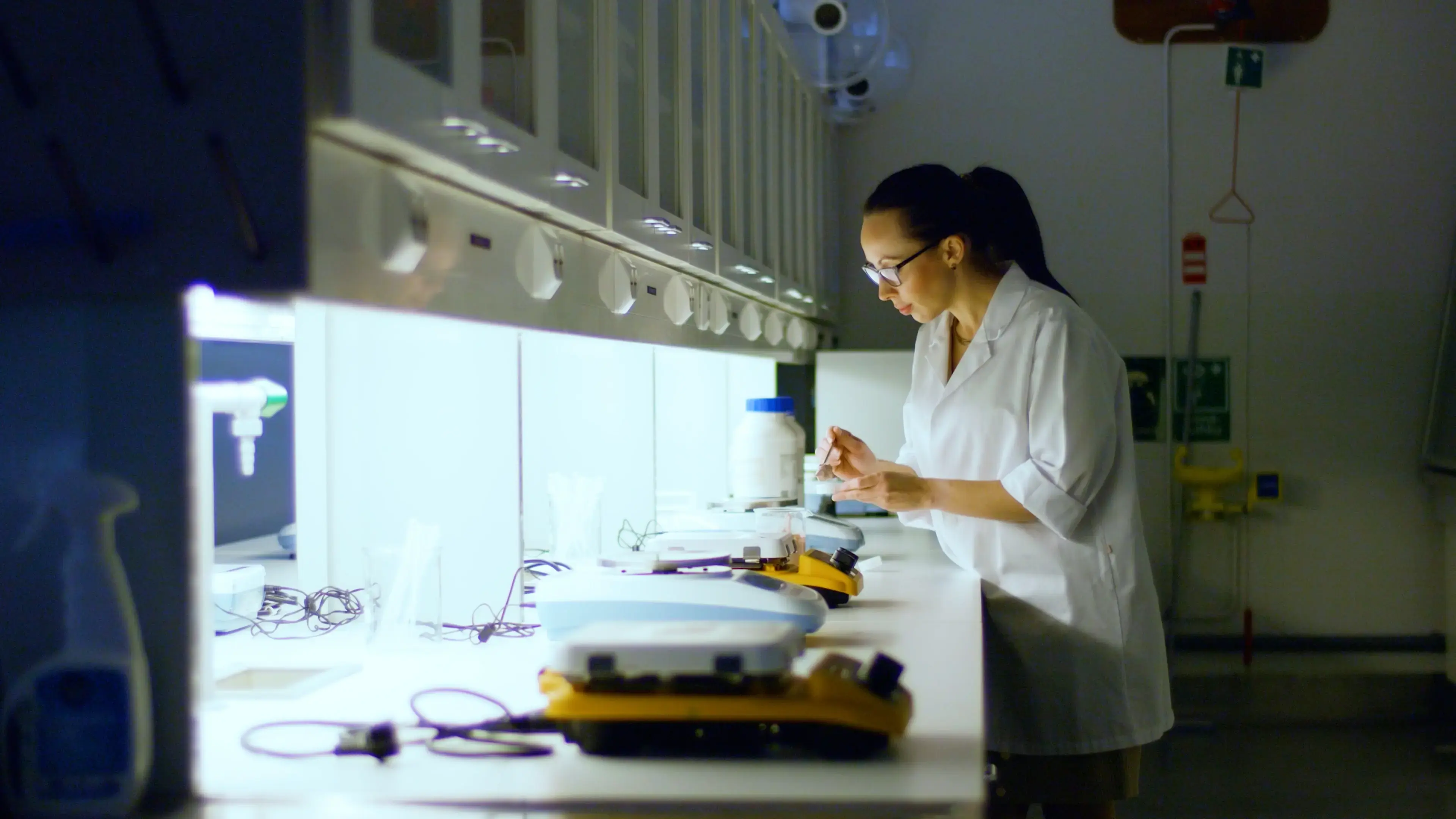 Read more : Master’s Degree in Development and Management of Cosmetics Expertise opens doors to an international career
Master’s Degree in Development and Management of Cosmetics Expertise opens doors to an international career
An interview with Sonja Tammentie, a graduate of the Master’s Degree programme in Development and Management of Cosmetics Expertise.
-
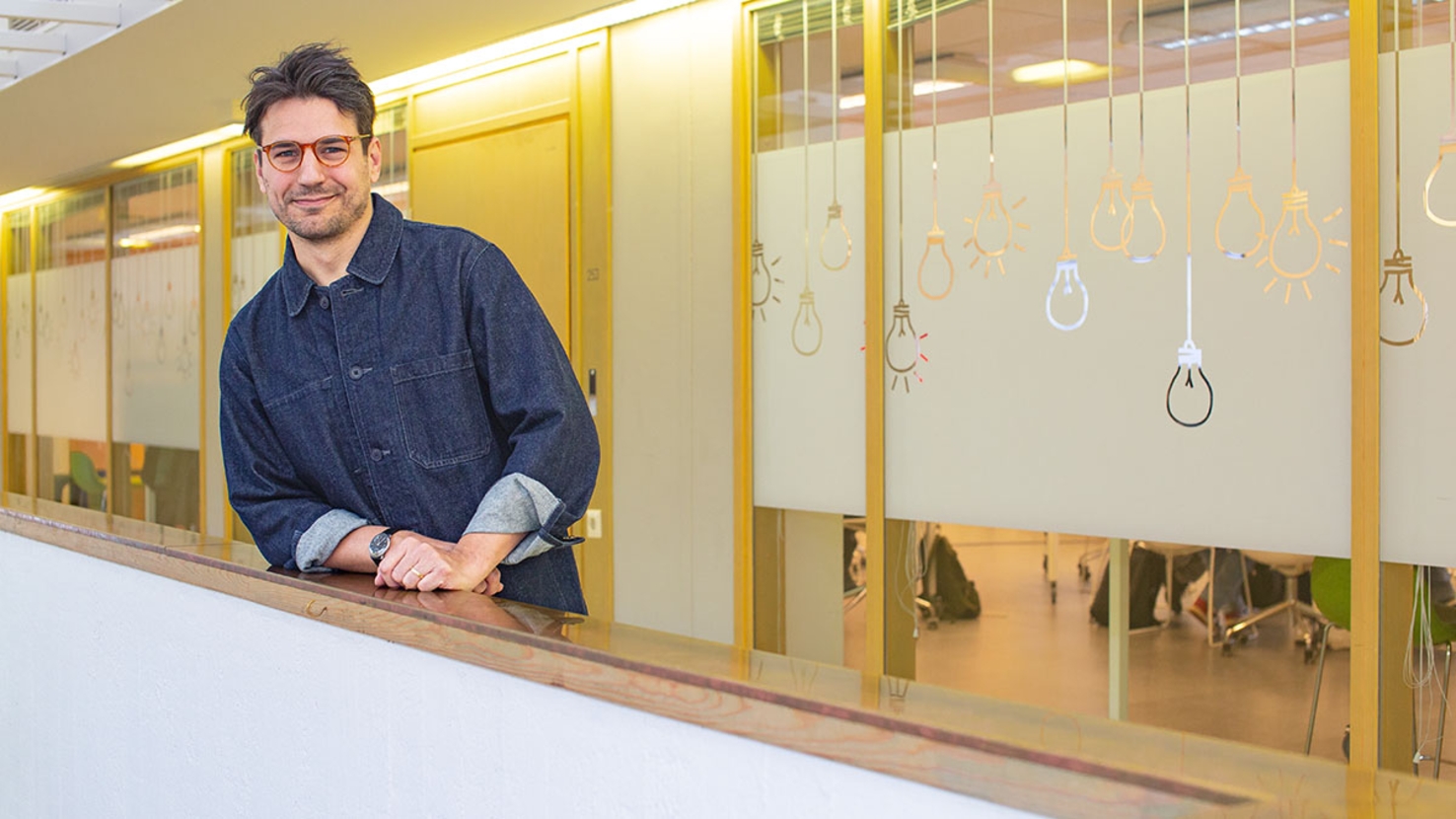 Read more : What is it like to study service design, SID graduate Corey L’Esperance?
What is it like to study service design, SID graduate Corey L’Esperance?
Interview with Corey L’Esperance, who just graduated from the Service Innovation and Design Master’s program at Laurea.
-
 Read more : Business Management student Lucas: “Studying in Laurea is really hands-on”
Business Management student Lucas: “Studying in Laurea is really hands-on”
Laurea’s degree programmes offer a springboard to your dream career.
-
 Read more : Graduating student Leila Suomi: “I am proud of my graduation”
Graduating student Leila Suomi: “I am proud of my graduation”
Leila Suomi, who is graduating as a social worker from the Degree Programme in Correctional Services, celebrated her graduation at Laurea’s graduation ceremony.
-
 Read more : 5 reasons to study at a University of Applied Sciences
5 reasons to study at a University of Applied Sciences
Laurea students Dinda Rahmaniar and Chien-Chuen Huang give five reasons to study at Laurea.
-
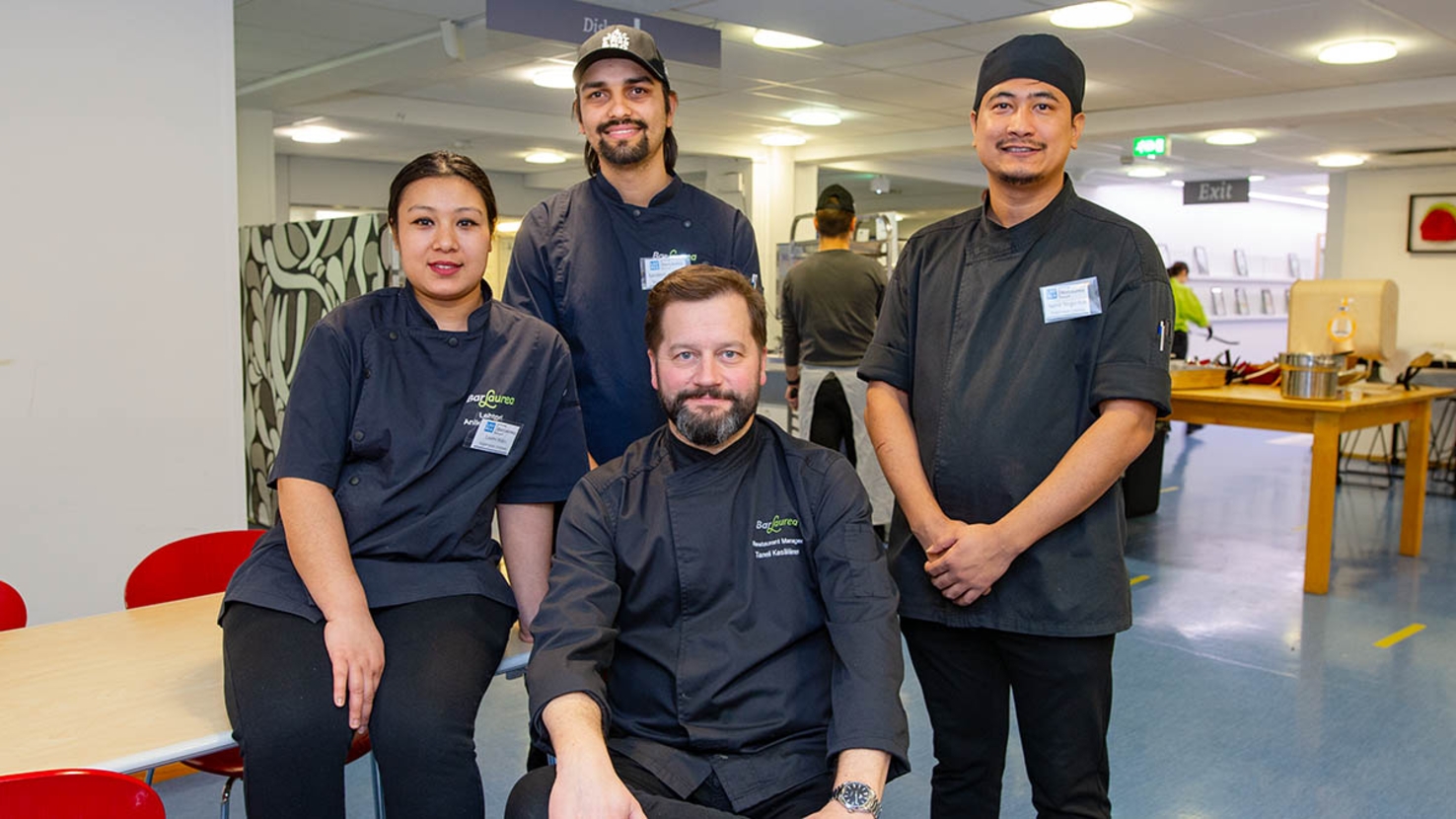 Read more : Nepalese students deepen their skills as BarLaurea’s supervisor trainees
Nepalese students deepen their skills as BarLaurea’s supervisor trainees
This spring semester, the BarLaurea teaching restaurant in Leppävaara will be run by Nepalese hospitality management students.
-
 Read more : Laurea graduate Lavanya: “Studying at Laurea in a practical way gave me confidence”
Laurea graduate Lavanya: “Studying at Laurea in a practical way gave me confidence”
Business management student Lavanya Joshi celebrating her graduation in a student interview.
-
 Read more : Laurea-graduate Krenare Bunjaku: “Studying at Laurea really prepared me for working life”
Laurea-graduate Krenare Bunjaku: “Studying at Laurea really prepared me for working life”
Krenare Bunjaku, who graduated from the Safety, Security and Risk Management training, gives a student interview.
-
 Read more : Master’s degree graduate Gabriel: “The master’s degree will open new doors for me”
Master’s degree graduate Gabriel: “The master’s degree will open new doors for me”
Gabriel Riako graduated from the Master’s Degree Programme in Global Health and Crisis Management.