Thesis
–
Master thesis: Hidden professionals in a shifting health system – what shapes prosthetists and orthotists career trajectories in Finland?
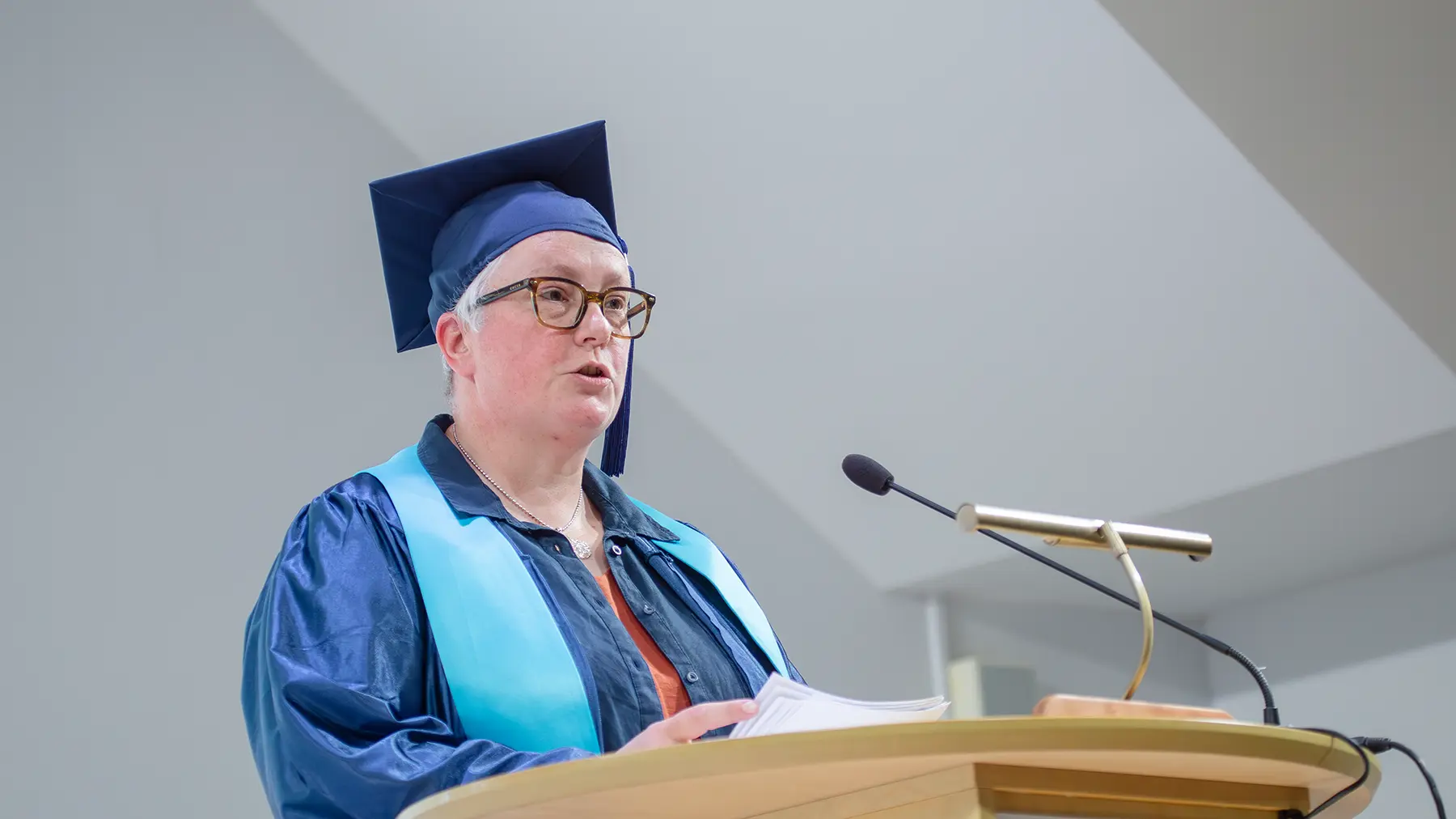
Alexandra Schreck explored in her thesis how prosthetists and orthotists (P&Os) educated in Finland experience and describe their motivations, career decisions and longer‑term prospects.
Prosthetists and orthotists (P&Os, Finnish: apuvälineteknikko) have limited visibility and remain a little-known profession in Finland’s health system. Yet their work is crucial for people experiencing mobility or functional limitations who depend on assistive technology (AT) to participate independently in everyday life. At the same time, global and national frameworks increasingly emphasise rehabilitation and AT as essential parts of universal health coverage and social rights, but the people who design, fit and adjust these devices often remain out of sight in public discussion and workforce planning.
A new Master’s thesis from Laurea University of Applied Sciences examines how P&Os educated in Finland experience their motivations, career decisions and long‑term prospects within a changing rehabilitation ecosystem. The qualitative study draws on interviews and focus group discussions to explore how individual motivations intersect with working conditions, procurement models and wider labour‑market structures.
The findings show that people who enter the P&O profession are strongly motivated by meaningful, hands‑on work with long‑term impact for clients. At the same time, they build their careers in a tender‑driven labour market with uneven opportunities across regions. Their choices to stay, move within or step away from clinical P&O practice are shaped not only by personal motivations but also by everyday conditions, including how clearly the profession is recognised and whether workplaces offer stable positions, supportive leadership and career development. The study identifies a dual pattern of entry into a relatively hidden profession: many younger applicants discover P&O almost by accident, while older, second‑career entrants make more deliberate, values‑driven transitions. Because they enter through different routes, they arrive with different expectations and feel differently prepared for the pressures they later meet in the system.
This commitment to meaningful, client‑centred, hands‑on rehabilitation work is continually tested by how services are governed and organised. P&Os described working in a tender‑driven market where contracts are time‑limited, providers can change with each procurement round, and posts are unevenly distributed between regions, creating constant uncertainty about job security, career development and longer‑term planning, such as where to live and work. Decisions to move into different roles or leave clinical P&O were rarely described as giving up on the work itself. Instead, participants framed them as pragmatic responses to accumulated pressures such as heavy workloads, limited opportunities for progression, gaps in leadership and contract uncertainty.
Overall, the study indicates that sustaining a stable P&O workforce cannot rest on individual motivation and resilience alone. It shows how procurement and contract arrangements, job location, working conditions, and the profession recognition all shape whether P&Os see a future for themselves in clinical practice or look elsewhere. Rather than prescribing specific solutions or assigning responsibilities to specific actors, the thesis points to the need for joint examination of these issues and for more systematic stakeholder mapping as a basis for any future workforce or policy initiatives.
Learn more about Alexandra Schreck‘s master thesis Motivations and Career Decisions of Prosthetists and Orthotists in Finland: A Qualitative Study on the Theseus portal.