
TraumaSkills – Developing a Trauma-Informed Operating Model in Aftercare for Child Welfare
in Finnish: TraumaTaito – Traumatietoinen toimintamalli lastensuojelun jälkihuoltoon. The project responds to the growing need for trauma-informed aftercare services for young people leaving child welfare care.
Project Background
The project responds to the growing need for trauma-informed aftercare services for young people leaving child welfare care. Rapid policy changes in aftercare eligibility, combined with the complex and often traumatic life experiences of care-experienced youth, have increased feelings of insecurity, mistrust, and social exclusion. Many young people in aftercare live independently with limited support networks and continue to process traumatic experiences long after placement has ended.
The project aims to strengthen trauma-informed practices in aftercare by embedding principles such as safety, transparency, empowerment, participation, and cultural sensitivity into both service structures and daily interactions.
The project is also grounded in research on Adverse Childhood Experiences (ACE), which shows that childhood trauma can have long-term impacts on mental health, physical health, relationships, and the ability to engage with services.
Expected Project Outcomes
Trauma-informed approaches can improve young people’s emotional regulation, trust, resilience, and access to support, while also reducing intergenerational disadvantages. At the same time, the project addresses the wellbeing of professionals working in demanding child welfare environments by developing trauma-informed practices that strengthen staff resilience, self-awareness, and occupational wellbeing. Through co-creation with professionals and young experts-by-experience, the project will create sustainable and impactful trauma-informed practices for aftercare services.
Project Objectives
The project develops a trauma-informed operational model for aftercare services in child protection within a well-being services county. The model is co-created together with the target group and experts-by-experience. The core of the operational model is a training that supports the establishment of permanent trauma-informed practices and procedures among the aftercare service working group. The model will be expanded to key support ecosystems for young adults to reduce service fragmentation and ensure a more comprehensive and effective support network.
Additional objectives include:
- Improving the quality of aftercare services.
- Strengthening employee wellbeing.
- Increasing the use of experiential expertise in aftercare services.
- Strengthening the role of an experimental culture in aftercare services.
- Documenting the operating model for nationwide use and scalability.
- Implementing the trauma-informed model helps prevent inter-generational disadvantage among aftercare clients and supports their transition to adulthood.
- Strengthening aftercare services also enhances the effectiveness of substitute care.
- In addition to improving client well-being, the model aims to support employee well-being in one of the most mentally demanding areas of social services, where staff retention and resilience are under strain.
- Increasing workplace security and a sense of control will also improve the sector’s attractiveness and staff retention.
Funders

Project information
Implementation time
1.3.2025 – 30.9.2027
Funder
ESR+ 2021-2027
Research programme
Project type
Themes
Project Manager
Laura Karjalainen
Sustainable development goals
Contacts
-
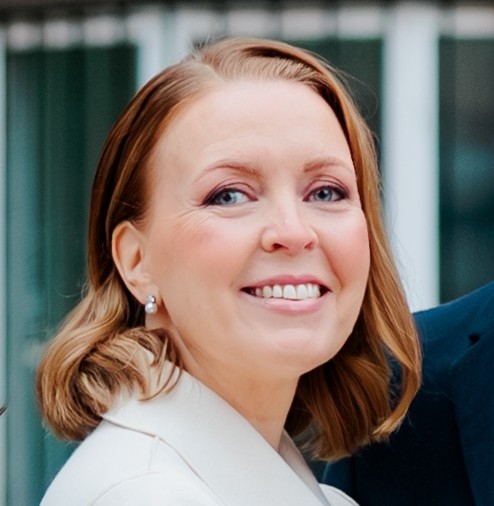
Laura Karjalainen
Special Advisor
laura.karjalainen@laurea.fi
+358 40 778 0451
You may also be interested
-
NEPTUNE – Next-generation European Protection and Technology for Undersea critical infrastructure Network Enhancement
Implementation time:
1.8.2026 – 31.7.2029
Read more: NEPTUNE – Next-generation European Protection and Technology for Undersea critical infrastructure Network EnhancementResearch programme:
Coherent Security -
Circular Economy RDI-Booster
Implementation time:
1.11.2024 – 31.8.2027
Read more: Circular Economy RDI-BoosterResearch programme:
Service Business and Circular Economy