Towards a more hopeful working life: experts, companies, and international networks met at Laurea campuses
Laurea hosted its annual International Week in January.
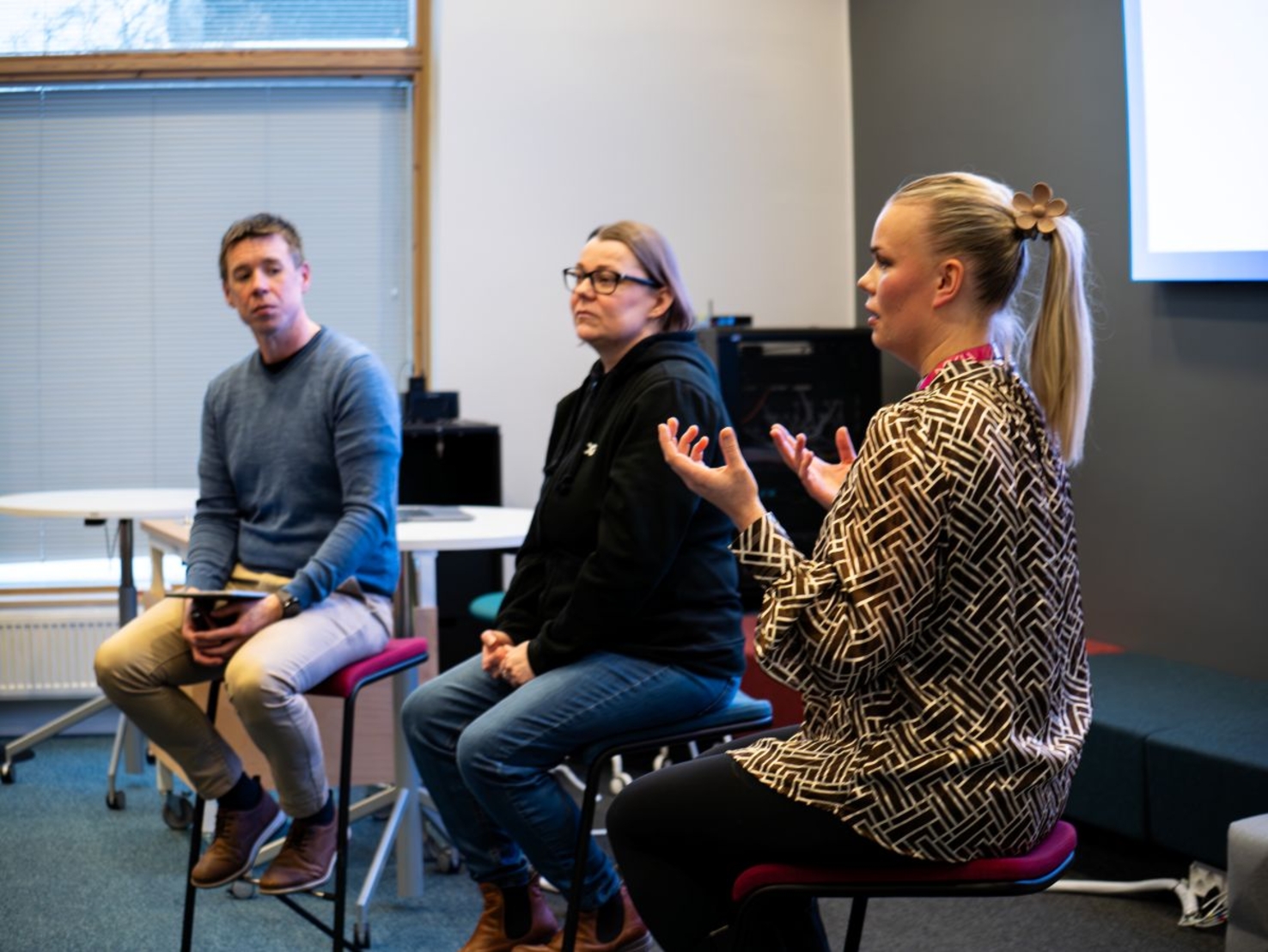
This past week, Laurea celebrated its annual International Week, during which companies, experts, and students focused on a more hopeful working life. The theme of the week, "Together towards a hope-centered future working life," brought together 46 higher education experts from European PIONEER partner universities and other higher education institutions.
The aim of the PIONEER festival organized during International Week was to encourage participants to encounter diverse perspectives and build a more inclusive and empathetic global community.
“Strengthening community spirit, academic interaction, and active networking are our shared responsibility - especially within the framework of the PIONEER alliance," summarizes Dr. Mika Launikari, Laurea's local coordinator for PIONEER cooperation.
At the same time, students and around 50 representatives from the world of work met at the JobFest recruitment event held on Laurea's campuses.
New solutions emerge in higher education ecosystems
One of the goals of the PIONEER alliance is related to how higher education institutions are active players in creating regional and Europe-wide ecosystems. These ecosystems, formed by students, researchers, companies, and public actors, generate innovation and new expertise and solve common challenges.
Accordingly, one of the panel discussions at the PIONEER festival focused on higher education ecosystems and their future. The panelists were Eike Permin (TH Köln), Lizanne Richle (BFH), and Petra Bujnakova (UNIZA). According to them, higher education ecosystems enable the solving of real challenges through applied research and provide students with the experience and skills needed in working life.
During Laurea's international week, Ilkka Kurkela, Director of Key Partnerships at Laurea, presented ecosystem cooperation to international guests, particularly from the perspective of partnerships between higher education institutions and working life.
The model combines project-based learning, recruitment support, joint visibility, and responsible operations. At its best, it offers students valuable working life skills and networks already during their studies, while providing companies with access to future talent and visibility. Successful cooperation requires strategic will, trust, open dialogue, and a shared understanding of value creation.
Laurea expert Sanna Niinikoski presented the theme of Challenge-based Education (CBE), which unites the actors in the PIONEER project. This approach to learning, which is based on practical challenges and their solutions, goes by different names at different universities, but the principles are largely the same across the alliance's universities.
Niinikoski presented the results of a study conducted during the first year of the PIONEER project. The study mapped the CBE methodology at different higher education institutions, which can be used as a basis for developing the model towards closer cooperation based on common strengths.
Examples of the PIONEER alliance's joint CBE work that have already been put into practice include BIP (Blended Intensive Program) intensive courses and COIL (Collaborative Online International Learning) courses implemented online.
Solutions for the future of work
During International Week at JobFest, students had the opportunity to learn about companies and expand their professional networks as companies shared information about their career opportunities. At the same time, companies gained valuable information from Laurea students about what they expect from working life.
At the Tikkurila and Leppävaara campuses, there were inspiring talks about alumni career stories, current working life skills, and how students can develop their own skills in the midst of a challenging employment situation. The speeches by employers and experts emphasized, among other things, the importance of artificial intelligence and digitalization in future working life and higher education.
For example, Dr. Asko Mononen from Laurea spoke about the digital skills of the 21st century, which he researched in his doctoral thesis. Amidst both old and new global challenges and rapidly developing technologies, such as generative artificial intelligence, it is becoming increasingly difficult for higher education institutions to predict what future curricula should include. Like many employers, Mononen's speech crystallized the same themes for solving the situation:
"One solution for supporting the employment of graduates is to focus on 21st-century digital skills, which combine cross-cutting competencies such as critical thinking, problem solving, and creativity, as well as the ability to use a wide range of digital applications in knowledge-intensive work to solve cognitive tasks," Mononen says.
More information:
- Mika Launikari
- Mika.Launikari@laurea.fi
- Tel +358503442976
- At Laurea, Mika is involved in international higher education cooperation, incl. the European University Alliance PIONEER, and competence development in the area of transformative leadership.