5 reasons to study at a University of Applied Sciences
Laurea students Dinda Rahmaniar and Chien-Chuen Huang give five reasons to study at Laurea.
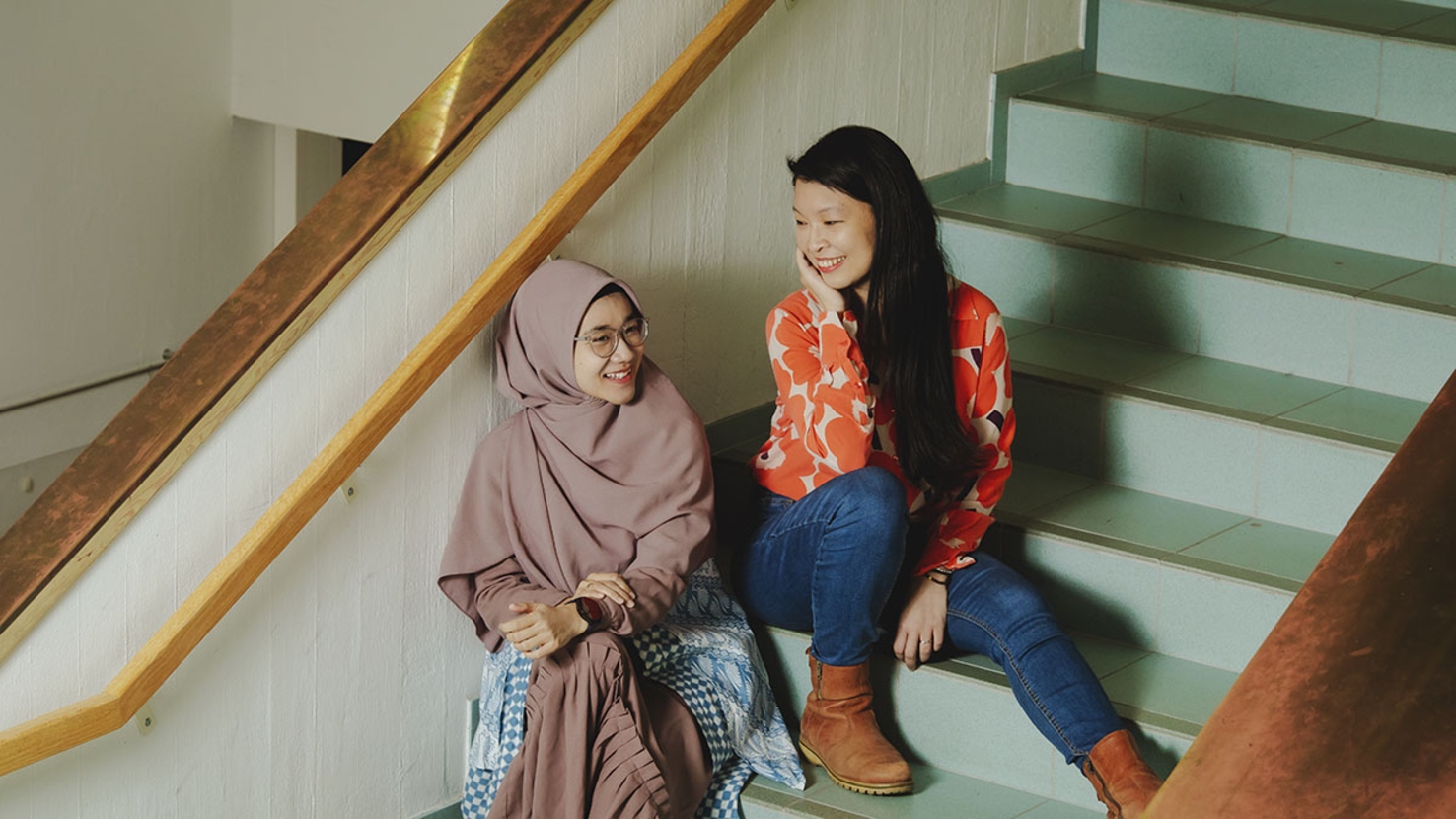
With an emphasis on practical learning and strong ties to work-life, Laurea’s degree programmes offer a springboard to a dream career. We sat down with two students to chat about flexibility, international student community, and skills that help them shine in the job market.
Dinda Rahmaniar, Master’s student in Global Health and Crisis Management, and Chien-Chuen Huang, Bachelor’s student in Business Information Technology, gave us a peek into their lives at Laurea University of Applied Sciences. From real-world projects to connecting with students all over the world, here are their five reasons to study at Laurea.
1 Hands-on learning turns theory into practice
Having previously worked as an attorney in her native Taiwan, Huang wanted to build expertise in a field she’d recently developed an interest in: business information technology and digital service development. Laurea’s bachelor degree seemed like the perfect fit.
“The courses are designed around real companies’ needs. In many assignments, a company representative presents a challenge, and we give proposals or build prototypes,” she explains.
Students receive valuable feedback from these industry guests, which helps build both confidence and competence – and creates useful connections. For example, a guest from software and digital services company Vincit visited Huang’s Service Design course and later wrote her an internship recommendation letter.
As an attorney, both Huang’s studies and her job were strongly theory-based. Now, she appreciates the hands-on nature of her software development studies, particularly during her 5-month internship at a web development company, which is a mandatory part of her degree. There, she could implement the skills she’d learned in practice.
“We really dive deep into problem-based learning. We get enough theoretical information to understand the subject well, but the main focus is solving a specific problem.”
One of these problem-based tasks was to design a programme for a tech company that addressed their circularity-related business challenges.
2 Studies foster a strong work-life connection
One of the reasons Dinda Rahmaniar enjoys her studies so much is, Laurea’s pedagogical model of Learning by Developing (LbD). It helps students apply theory directly to work situations. As Rahmaniar works in health care alongside her studies, she has an immediate opportunity to put her learnings into practice.
“I’ve already gained skills in crisis communication that are applicable to my current job,” she explains.
Both Rahmaniar and Huang feel their studies connect well to their current and future roles. Guest lectures from professionals provide insights into current industry practices and tools, and networking opportunities pave way for future career moves.
Huang shares a personal example. One of Laurea’s career advisors helped her polish her resume and communicate effectively with company representatives at recruitment events.
“Really? I need to check that out,” Rahmaniar responds, pleasantly surprised.
3 Degrees with international exposure
Rahmaniar’s degree doesn’t include an internship, but she’s applied for an exchange course with Erasmus+ in the Netherlands next spring. Learning from students around the world is eye-opening for her. This is also something she appreciates in her day-to-day studies at Laurea.
“I’ve met students from so many backgrounds: Pakistan, Taiwan, European countries… It’s great to have exposure to different cultural perspectives and working styles,” Rahmaniar says.
Internationality is also embedded in Laurea’s courses. According to Rahmaniar, the global health programme emphasises international collaboration, negotiation, and crisis communication, which are all crucial work-life skills in the context of global health care.
Huang agrees.
“We have real company cases from international companies, or cross-cultural challenges, where we have to collaborate sometimes across multiple continents and time zones,” she says.
These cross-cultural challenges are familiar to Rahmaniar as well, having worked on a primary health care transformation project in Indonesia. There, she got to collaborate with the local Ministry of Health and a US-based organization in order to improve the health system through digital tools.
4 Studies that allow flexibility
As Chien-Chuen Huang studies fully online, she occasionally struggles with juggling different responsibilities. Yet she emphasises that Laurea’s staff and faculty members are supportive and easy to get hold of.
“Our teachers really understand that everyone is in a different phase of their lives. They follow the curriculum but take individual needs into account. There’s always support available,” she says.
Rahmaniar, too, wears many hats: she’s a mother, a Master’s student, and a remote employee for a health care organisation in her home country, Indonesia. If her studies required daily on-campus presence, she would simply run out of time.
“I need to be on campus only three to four days a month. The rest is independent and online studies. The flexibility really helps manage everything in my life,” she says.
5 A warm community
Despite being in different programmes and stages in their studies, both Dinda Rahmaniar and Chien-Chuen Huang feel at home at Laurea. Group assignments have led to peer support and even friendships, and the overall atmosphere is welcoming.
“On campus, staff members are so helpful. It has created a sense of belonging for us international students as well,” Rahmaniar says. She’s thinking of joining a student union or association, in the future, too.
For Huang, programme tutors – fellow students who help newcomers find their footing – are invaluable. As a full-time online student, building community can require effort and planning.
“My tutors are amazing, they keep us up to date and really do their best to get us together in person. Sometimes we just talk about life. That’s important too.”